Auxiliary Equipment — Usually the Cheapest Way to More Throughput
When a mill will not reach its rated output, the cause is more often the material going in than the grinding inside. Fixing pre-dispersion costs a fraction of a bigger mill and often gains more.
Four families, one purpose: make the mill's job easier
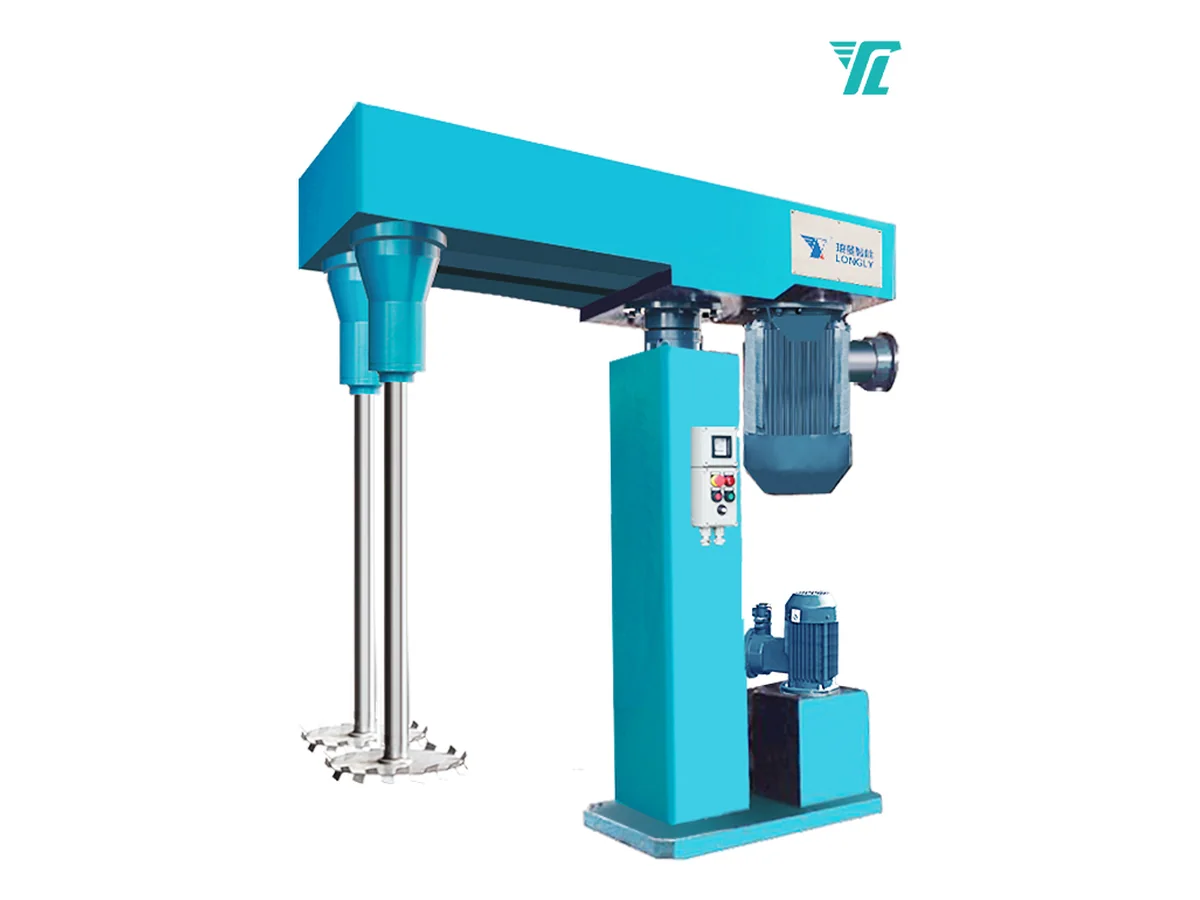
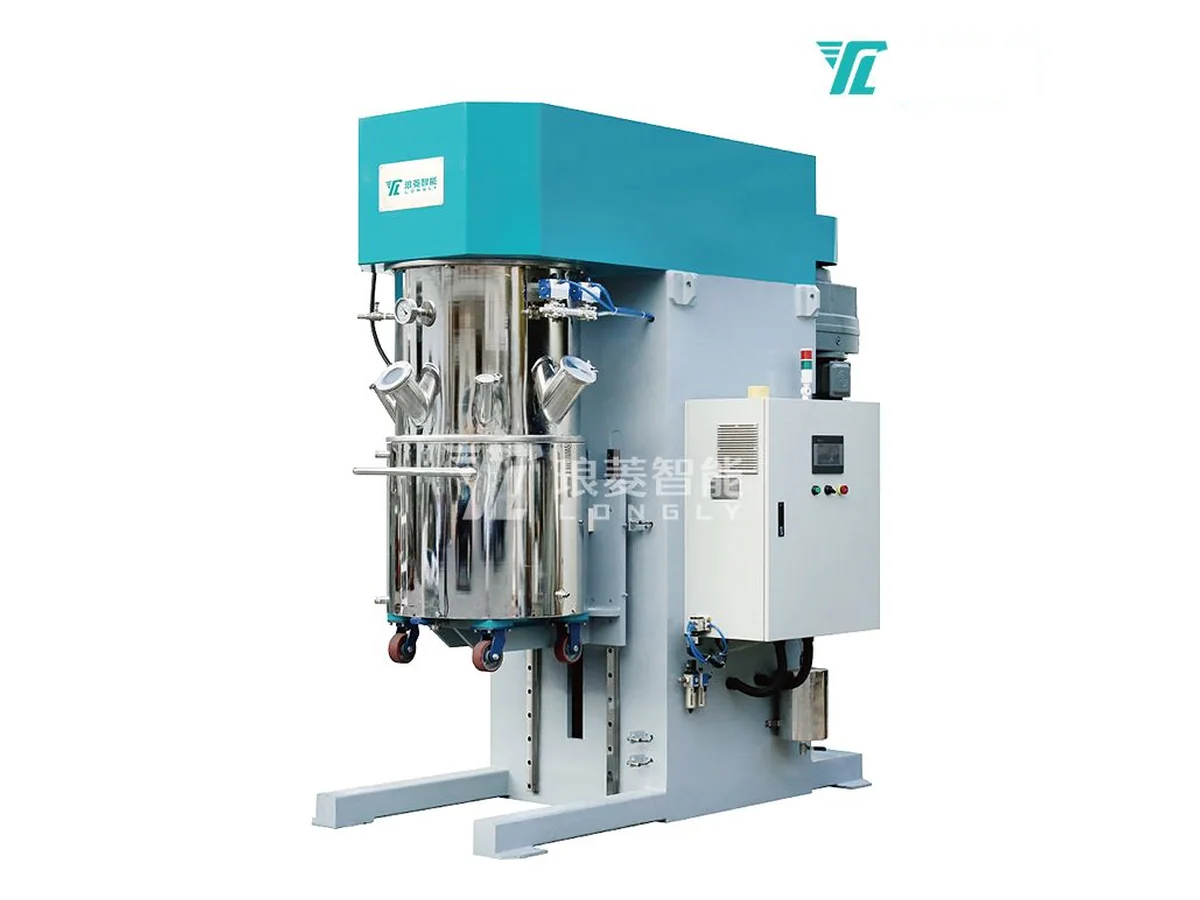
| Family | What it does | Put it before or after the mill |
|---|---|---|
| PM-AID inline disperser | Wets out and de-agglomerates powder into liquid | Before. This is the one that changes mill output |
| PM-AX mixer / emulsifier | Blends, emulsifies, homogenises | Before or after, depending on the product |
| PM-ASD spray dryer | Turns slurry into powder | After, when you sell powder not slurry |
| PM-A3R three-roll mill | Grinds very high-viscosity paste | Instead of a bead mill, for paste too stiff to pump |
Why pre-dispersion beats a bigger mill
A bead mill's job is to break agglomerates down. If the powder going in is still in large, well-sintered clumps, the mill spends its first passes doing work that a disperser could have done in seconds — at a fraction of the energy.
Mill runs hot, output low
Energy is going into breaking clumps, not into narrowing the distribution. The motor is working; the process is not.
Powder never properly wetted
Dry powder entering a mill without wetting out stays as islands of agglomerate. Media cannot reach inside them efficiently.
Inline disperser upstream
Typically 20–40 % more output from the same mill, or the same output at lower specific energy. Measured per product — not guaranteed as a blanket figure.
The comparison to make: a second bead mill versus an inline disperser. For most plants the disperser is a fifth of the price, takes a fraction of the floor space, and gains more. We will tell you which applies to you — including when the answer is neither.
What each family is actually for
| Model | Duty | Throughput | Typical pairing |
|---|---|---|---|
| PM-AID-D | Inline dispersion, standard rotor-stator | 1 – 20 m³/h | Upstream of PM-M |
| PM-AID-N | Nano dispersion, high-shear, for hard-to-wet powder | 0.5 – 8 m³/h | Upstream of PM-N |
| PM-AX-E1 | Single-stage emulsifier | 1 – 15 m³/h | Stand-alone product line |
| PM-AX-E3 | Three-stage emulsifier | 0.5 – 10 m³/h | Where droplet distribution matters |
| PM-AX-P | Planetary mixer | 50 – 2 000 L batch | Feeds PM-V or PM-B |
| PM-ASD-C | Spray dryer, centrifugal atomiser | 5 – 500 kg/h evap. | Downstream of PM-M |
| PM-ASD-P | Spray dryer, pressure nozzle | 5 – 300 kg/h evap. | Denser, coarser powder |
Ranges are typical for this class of machine. Evaporation capacity, not product output, is the sizing figure for a spray dryer — ask for it in kg water/h.
Tell us the symptom, not the equipment
Most enquiries arrive as "we need a disperser". The useful version is what is going wrong. Those two lead to different machines more often than you would expect.
| If you say this | We will look at |
|---|---|
| "The mill will not reach rated output" | Pre-dispersion, feed consistency, media condition |
| "Powder floats and forms lumps" | Inline disperser, and whether the wetting order is wrong |
| "The emulsion separates in a week" | Emulsifier stage count and homogenisation pressure |
| "Our paste will not mix" | Planetary mixer, not a disperser |
| "We ship slurry but customers want powder" | Spray dryer sizing, and whether toll drying is cheaper |