Disc-Type Bead Mill
If the target is 'under 10 µm, as many tonnes as possible', the disc rotor is still the cheapest way to get there. It is not the finest and not the narrowest — it is the one that keeps running.
Where a disc rotor is the correct answer
Most bead mills sold into coatings and minerals are disc mills, and usually that is right. These are the six cases where it still is.
| What you are making | The problem people arrive with | Why this configuration helps |
|---|---|---|
| Architectural coating, volume grade | The mill is the constraint in the line — you need more tonnes, not a finer number | The disc stack pumps as it grinds, so throughput per kilowatt is higher than any pin geometry at the same fineness |
| Mineral filler slurry (CaCO₃, talc) | Media consumption is the biggest cost line, not electricity | Large media at moderate tip speed wears slowly, and 1.0 – 1.5 mm beads are the cheapest per kilogram you can put in a mill |
| Gravure and flexographic ink | Solvent-based product, and the mill has to be explosion-proof without doubling the price | A simple chamber with fewer precision parts is cheaper to build in ATEX execution |
| Adhesive and sealant premix | Viscosity climbs during the pass and the mill starts to starve | The disc generates strong axial flow, which keeps feeding a charge that is thickening |
| Ceramic body slip and glaze | Iron contamination from worn steel, and the mill runs 24 h | PU or ceramic discs and lining, with a wear allowance you can measure and plan for |
| Recycled fibre and de-inking | Contaminants in the feed — the mill has to survive things it was not designed for | No fine screen in the main flow path, and a chamber you can open in twenty minutes |
If your specification includes the spread of the distribution, or a D90 below 1 µm, read the pin-type page before this one.
What you are paying for — and what you are not
A disc mill is a simpler machine than a pin or turbine mill. That is the point, and it is also the limit.
A stack of discs, not a precision pin field
- Feature
- Flat or slightly profiled discs on a shaft, with spacers between them.
- Advantage
- Manufacturing tolerance is looser, so the machine costs less to build and less to repair.
- Benefit
- At 3 – 10 µm that tolerance costs you nothing in result, so you are not paying for precision the application cannot use.
Pumping is built into the geometry
- Feature
- The rotating disc stack drives slurry axially through the chamber.
- Advantage
- Higher volumetric flow per kilowatt than a pin rotor at the same tip speed.
- Benefit
- More tonnes per shift from the same motor — which is normally the number the plant is measured on.
Discs are consumables, and priced like it
- Feature
- Each disc is a separate part on a common shaft.
- Advantage
- You replace one disc, not a rotor assembly.
- Benefit
- Wear cost per tonne is predictable and low; on abrasive mineral slurry this dominates the owning cost.
A slotted screen, sized to the media
- Feature
- 0.6 mm and above is comfortably outside the range where screens blind.
- Advantage
- No dynamic separator, no extra drive, no extra power draw.
- Benefit
- One less system to maintain — and one less thing to explain to a shift team at 3 a.m.
PM-MD models and working envelope
The disc configuration covers the widest size range in the PM-M series, because it is the one used for the largest tonnages.
| Model | Chamber volume | Motor power | Media range | Throughput | Target fineness |
|---|---|---|---|---|---|
| PM-MD30 | 30 L | 37 kW | 0.6 – 1.2 mm | 200 – 800 L/h | D90 2 – 15 µm |
| PM-MD60 | 60 L | 75 kW | 0.6 – 1.5 mm | 600 – 2,000 L/h | D90 2 – 15 µm |
| PM-MD150 | 150 L | 160 kW | 0.8 – 1.5 mm | 1,500 – 5,000 L/h | D90 3 – 20 µm |
Model figures are typical for this configuration — the binding specification comes with your quotation. Throughput depends more on your slurry than on the chamber, so treat these as the range we would expect, not a promise.
Common to every PM-MD
- Wetted parts: SS316L, polyurethane, silicon carbide or zirconia
- Separator: slotted screen, slot matched to media
- Cooling: full chamber jacket, chilled water
- Seal: double mechanical seal with barrier fluid
- Control: PLC + HMI, recipe storage, temperature and pressure interlocks
- Options: ATEX configuration, ceramic discs, wear-compensated spacers
When this is the wrong machine
Four cases where a disc mill will disappoint you, and where to go instead.
You need D90 below 1 µm
The disc cannot hold a narrow enough residence-time distribution, and the media size you would need does not pass a disc stack cleanly.
PM-N series nano mill →The spread is part of your specification
Hiding power and colour strength depend on the tail. A pin rotor closes it; a disc smears it out.
PM-MP pin-type mill →Product temperature is the limit
Discs put more energy into the same mass, and the chamber wall may not be able to take it out fast enough for a heat-sensitive binder.
PM-MP pin-type mill →Your material is a paste
Above roughly 30,000 cP the chamber starves and the discs run in a void.
PM-V high-viscosity mill →None of these are marginal. They are the four reasons a disc mill gets replaced within a year of installation.
Before you buy, send us a kilogram
Send 1 – 2 kg and we will run the pass series on a PM-MD at the media size we would quote. You get the curve, the specific energy and a budget price.
Send 1 kg of your material
Slurry if you have it; powder plus the carrier you intend to use if you do not. We will send the address and the customs description to use, so it clears without a hold.
We run a size-reduction series
On the configuration we would actually quote. D10 / D50 / D90 after each pass, plus product temperature, so you can see where the curve flattens.
You get the curve, the model and a budget price
Whether or not you buy. The report is yours to show your own board or your customer.
Grinding something else?
PM-MD is the volume workhorse of the range. The other seven configurations exist because it does not cover everything.
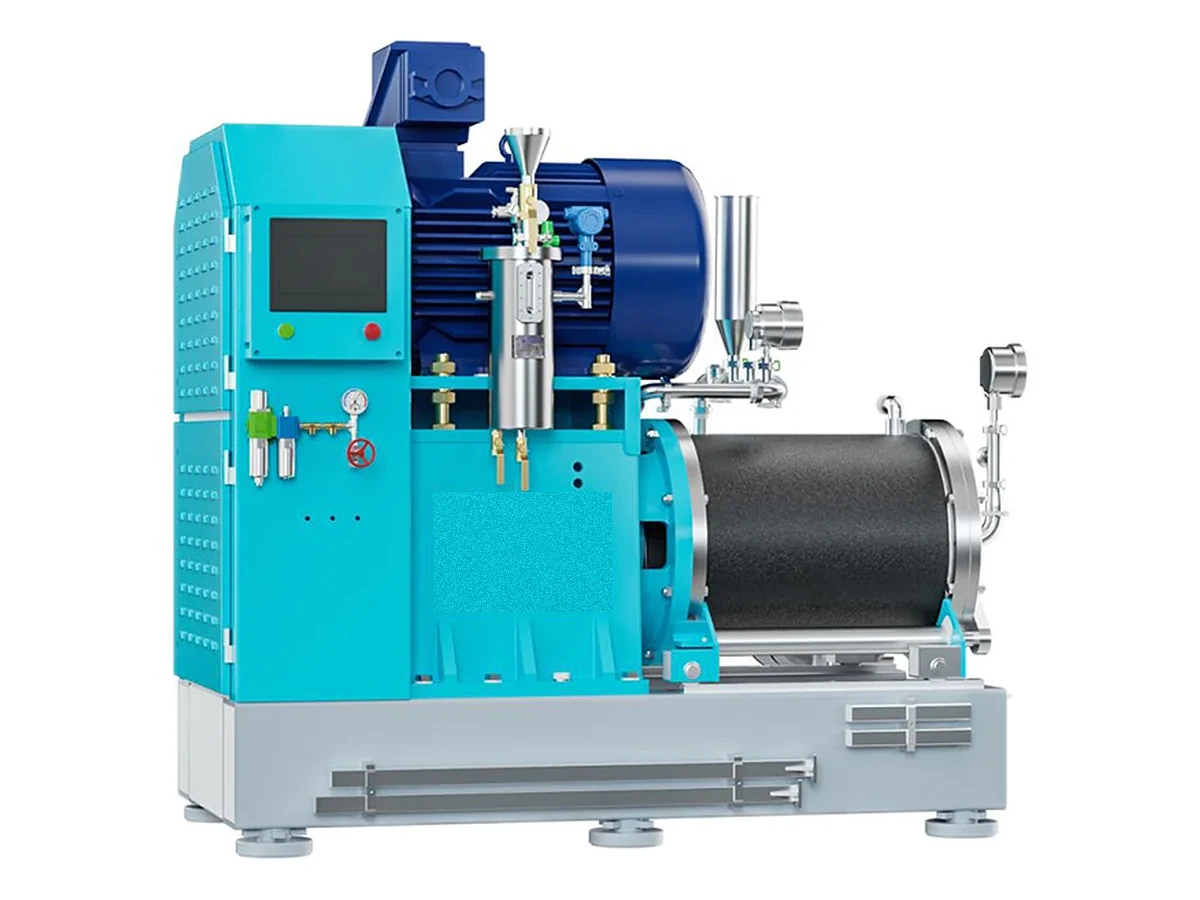
Nano Bead Mill Most requested
Small media, gap or centrifugal separation, aggressive chamber cooling.
Choose it when: Worth it only if your application genuinely needs sub-100 nm.
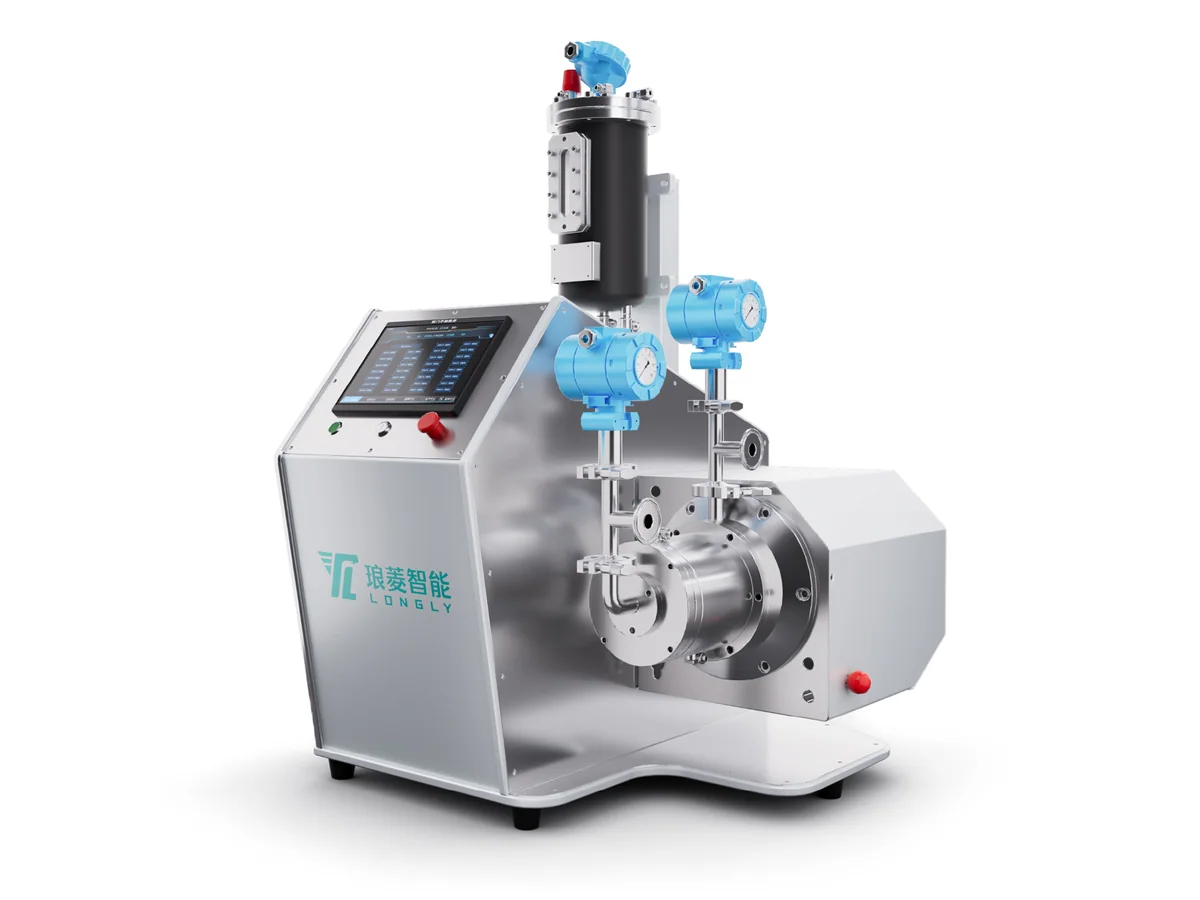
Lab & Pilot Mill Most requested
Same media and tip speed as the production machine, so results scale.
Choose it when: Start here if you need to prove a target before buying capacity.
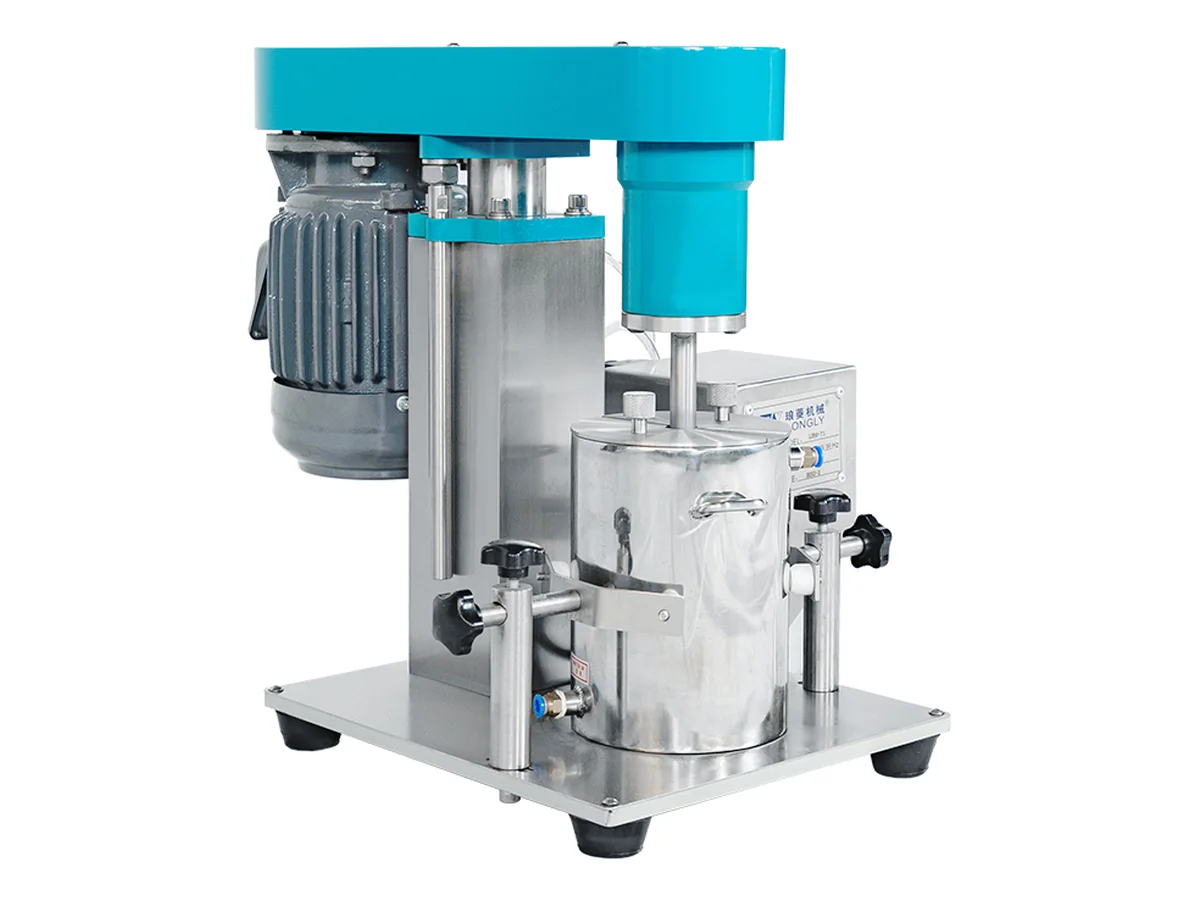
Basket Mill
Single-vessel dispersion — no external pump or recirculation loop.
Choose it when: Best for many formulations in small batches, or when cleaning time dominates.
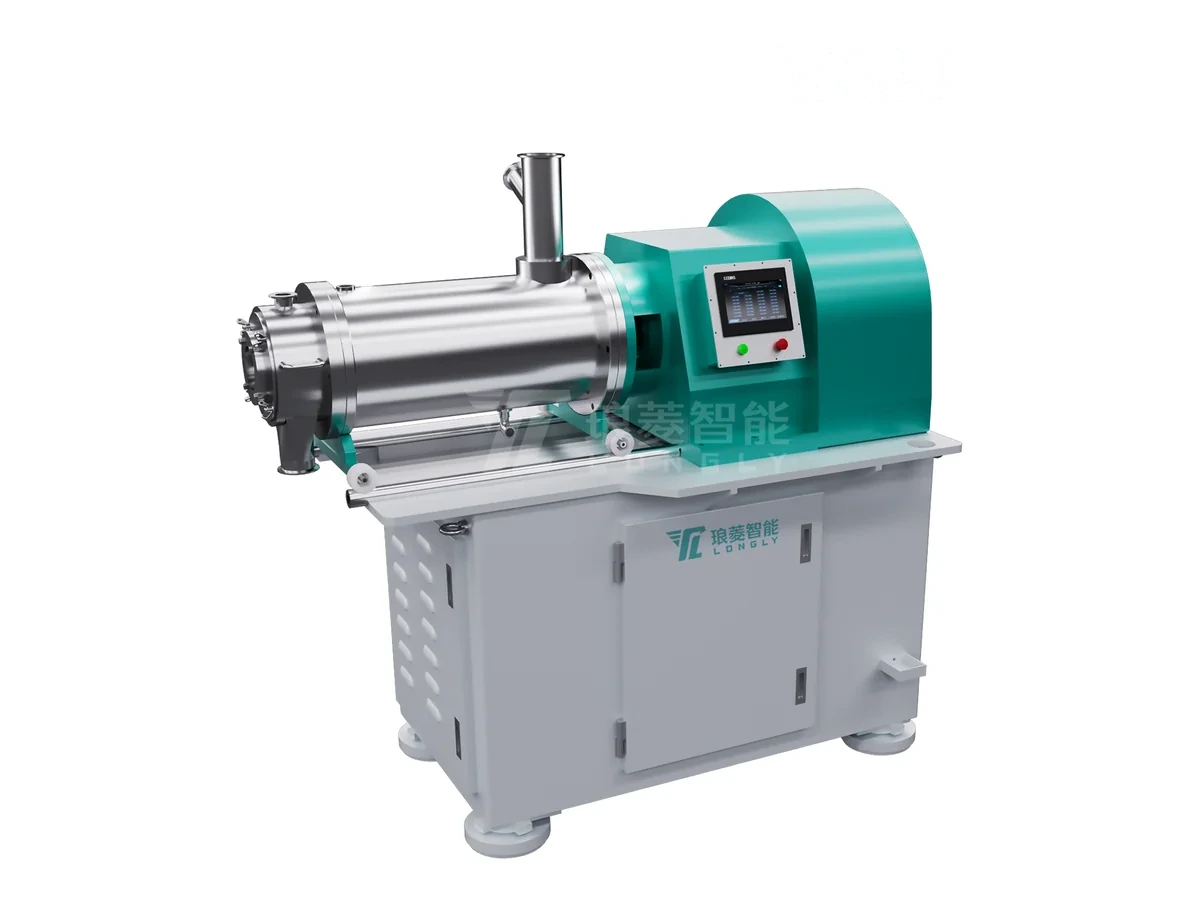
Dry Grinding Mill
Dry micronisation with air classification and dust collection.
Choose it when: For powders that cannot be processed wet — no drying step downstream.
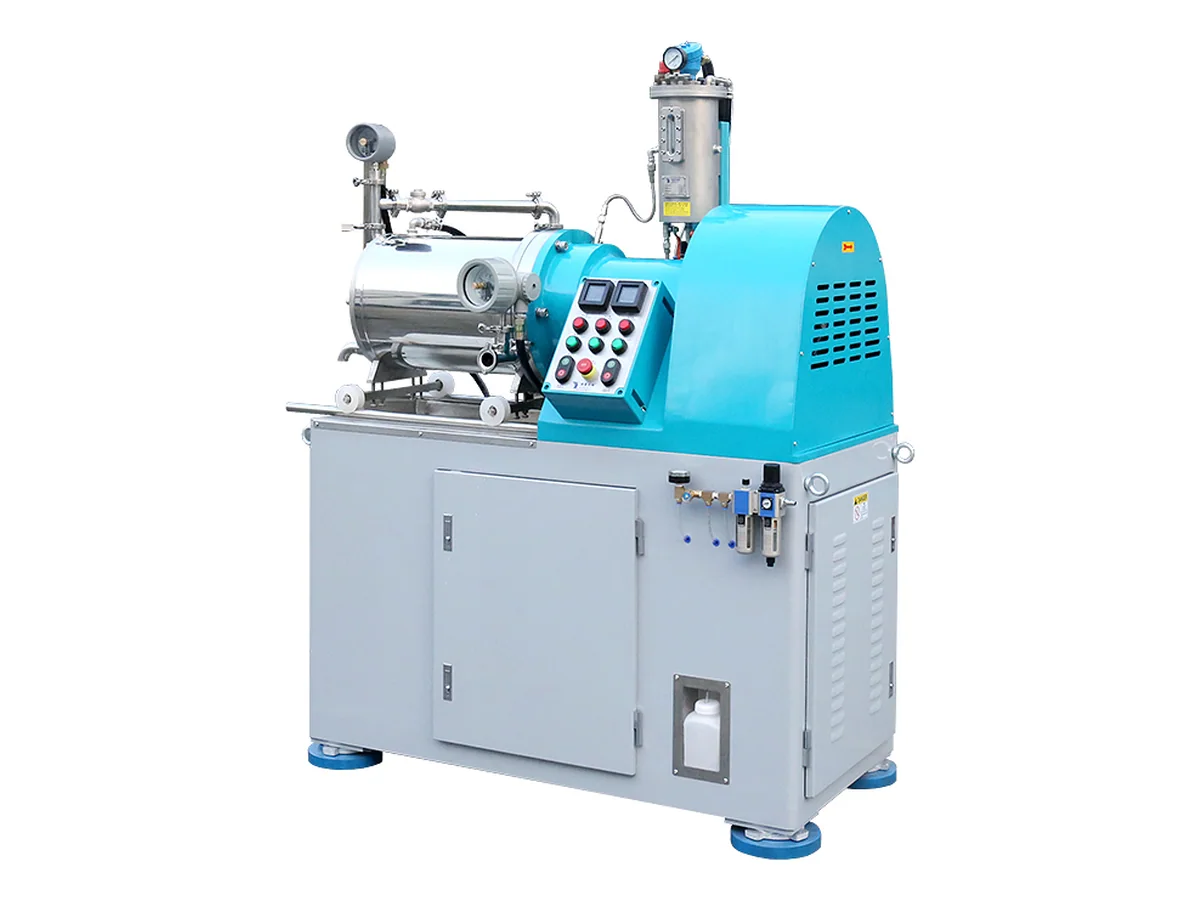
High-Viscosity Mill
Built for high-solid and high-viscosity material, with screw discharge.
Choose it when: For pastes and highly loaded compounds a standard mill will not move.
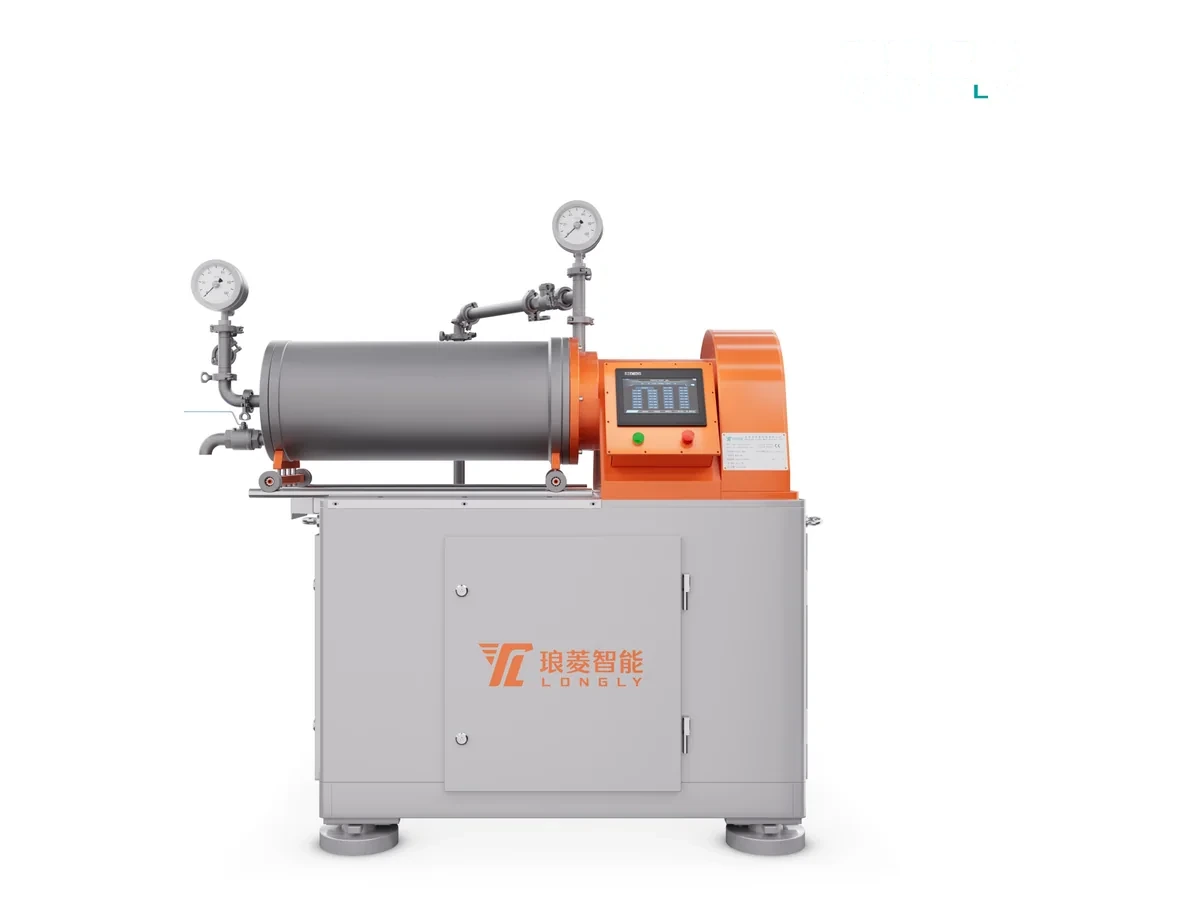
Mining & Large-Scale Mill
Stirred media mills sized for mineral slurry at plant throughput.
Choose it when: Selected on throughput and media consumption, not on fineness alone.
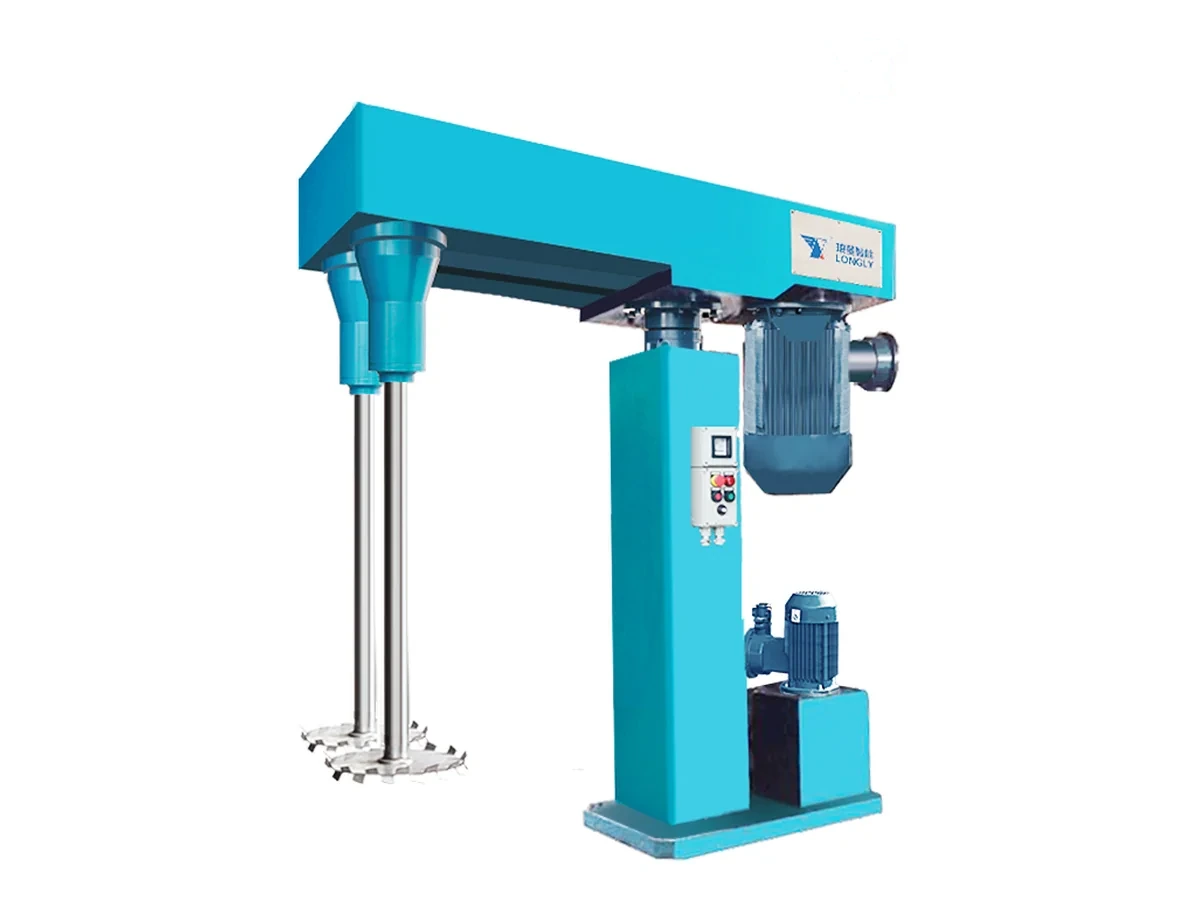
Complementary Equipment
Three-roll mills, inline pre-dispersion, mixers and spray dryers.
Choose it when: Often the cheapest throughput gain is better pre-dispersion, not a bigger mill.
All eight configurations
The complete index — wet and dry, 0.5 L laboratory units through to plant-scale stirred media mills.
Open the equipment index →Before you ask
Why is a disc mill cheaper than a pin mill?
Fewer precision parts. A pin rotor needs pins set to a controlled gap against the chamber wall; a disc stack does not. That difference shows up in the price and again in every spare part for the next ten years.
Can a disc mill reach 1 µm?
It can get close with small media and several passes, but the distribution widens and energy per tonne climbs steeply. Below about 1 µm the economics favour a pin rotor.
What media size should I use?
0.6 – 0.8 mm for 2 – 5 µm, 1.0 – 1.5 mm for 5 – 20 µm. Larger media wears slower and costs less per kilogram, so do not go finer than the target requires.
How often do discs need replacing?
It depends entirely on the slurry. On soft pigment, years; on abrasive mineral filler, months. We will tell you the wear volume per 1,000 hours for your material rather than a number in a brochure.
Disc or pin — it comes down to one question
Is the spread of your distribution part of the specification, or only the median? If it is only the median, buy the disc mill and spend the difference on media.