Centrifugal Bead Mill
Below about 0.1 mm, screens stop working. A dynamic centrifugal separator is the only way to hold beads that small back at production flow — and on the dual-drive build the rotor and the separator turn at speeds you set independently.
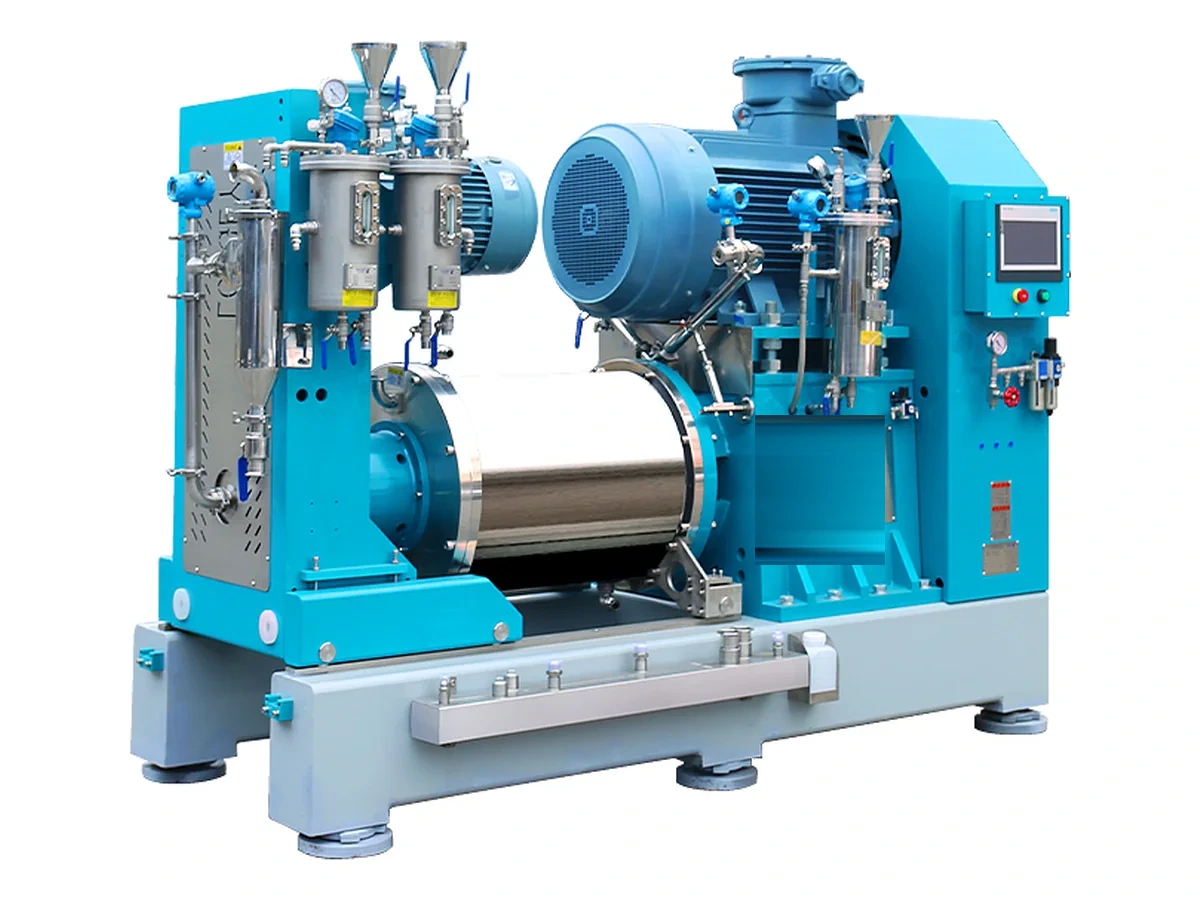
The configuration you end up at when 100 nm is not enough
Every route below 80 nm goes through the same bottleneck: the media has to get smaller, and small media cannot be held back by a screen or a fixed gap.
| What you are making | The problem people arrive with | Why this configuration helps |
|---|---|---|
| High-transparency pigment | The last few percent of coarse particles are what makes the film look hazy, and 0.3 mm media will not break them | 0.05 – 0.08 mm media becomes usable, which puts the fineness floor under 80 nm |
| Carbon nanotube and graphene paste | Bundles survive because the stress events are too weak and too few | Small, dense media at high frequency gives far more stress events per pass |
| API nanosuspension | Target is 100 – 200 nm for bioavailability, and the chamber must be cleanable to validation standard | Open geometry, no screen to hide residue, CIP connections as an option |
| MLCC dielectric slurry | Sub-micron barium titanate with no metal contamination and a very tight spread | Ceramic wetted parts plus centrifugal separation, which is gentle on an already-fine product |
| Ceramic inkjet ink | Jetability depends on the coarse tail, not the median | The separator can be tuned while running — you change the cut point without stopping the mill |
| Quantum dot and optical dispersion | Agglomerates re-form if the energy density drops anywhere in the loop | Independent separator speed keeps the chamber full and the energy density constant |
This is the most expensive way to make a bead mill grind fine, and it is worth it only when the target genuinely sits below about 80 nm. We will ask you to justify that number before quoting.
Two drives, for two different jobs
On a conventional mill, one motor turns the rotor and the separator is either fixed or geared to it. PM-NX splits them, and that is what makes sub-0.1 mm media practical.
Centrifugal, with no screen anywhere
- Feature
- A rotating separator creates a centrifugal field that holds media back while product passes.
- Advantage
- There is nothing to blind and nothing to tear, at any media size.
- Benefit
- You can run 0.03 mm beads continuously — which is the only route to 50 nm at production flow.
Rotor and separator on separate shafts
- Feature
- Two independent motors, each with its own speed setpoint.
- Advantage
- The cut point is set by separator speed, and grinding energy by rotor speed. They no longer fight each other.
- Benefit
- You can tune the separation while the mill is running, and hold it as the media wears — instead of changing a screen.
0.03 mm at the bottom of the range
- Feature
- The chamber and separator are dimensioned around sub-0.1 mm media, not adapted to it.
- Advantage
- Media down to 0.03 mm runs without packing or classification problems.
- Benefit
- Fineness becomes a choice rather than a limit — 50 nm is a specification, not an aspiration.
Built for solvent and for clean product
- Feature
- Double mechanical seal with barrier fluid, full jacket, optional ATEX and CIP.
- Advantage
- No product reaches the atmosphere in normal operation.
- Benefit
- Which is what you need before a solvent-based or pharmaceutical product can be run on it at all.
PM-NX models and working envelope
The dual-drive configuration is offered from laboratory to production chamber size, with the same separator geometry across the range so results scale.
| Model | Chamber volume | Motor power | Media range | Throughput | Target fineness |
|---|---|---|---|---|---|
| PM-NX5 | 5 L | 15 + 2.2 kW | 0.03 – 0.1 mm | 2 – 20 L/h | D90 50 – 100 nm |
| PM-NX30 | 30 L | 45 + 5.5 kW | 0.03 – 0.1 mm | 30 – 150 L/h | D90 50 – 100 nm |
| PM-NX60 | 60 L | 90 + 7.5 kW | 0.05 – 0.1 mm | 80 – 350 L/h | D90 50 – 100 nm |
Model figures are typical for this configuration — the binding specification comes with your quotation. The second motor figure is the separator drive — it is not an optional extra on this configuration.
Common to every PM-NX
- Wetted parts: silicon carbide, zirconia or polyurethane; SS316L where the product allows
- Separator: dynamic centrifugal, speed controlled independently of the rotor
- Cooling: full chamber jacket, plus cooled rotor option
- Seal: double mechanical seal with barrier fluid; ATEX execution available
- Control: PLC + HMI, both drives on recipe, separator speed logged against batch
- Options: CIP connections, ceramic chamber, solvent recovery connections
When this is the wrong machine
A dual-drive centrifugal mill costs roughly a third more than the equivalent pin mill. Four cases where that money is wasted.
D90 100 – 300 nm is your target
A pin rotor with a gap separator reaches that with 0.1 – 0.3 mm media, at lower cost and with fewer things to maintain.
PM-NP pin-type nano mill →Your material is above about 5,000 cP
Sub-0.1 mm media will not fluidise a thick charge, and the separator cannot classify what is not moving.
PM-V high-viscosity mill →You need tonnes per hour, not nanometres
The energy per tonne at 50 nm is high by definition. If throughput is the constraint, this is the wrong end of the range.
PM-MD disc-type mill →Media cost is already your biggest problem
0.03 – 0.05 mm beads are the most expensive media you can buy, and they wear out. Budget the consumable before you budget the machine.
Grinding media →The last one is the one people forget. On a 50 nm duty, media can cost more per year than the electricity — ask for the consumption figure, not just the price.
Before you buy, send us a kilogram
Sub-0.1 mm media is unforgiving of a material it does not suit. Send a sample and we will tell you honestly whether 50 nm is reachable on your product before either of us spends more time on it.
Send 1 kg of your material
Slurry if you have it; powder plus the carrier you intend to use if you do not. We will send the address and the customs description to use, so it clears without a hold.
We run a size-reduction series
On the configuration we would actually quote. D10 / D50 / D90 after each pass, plus product temperature, so you can see where the curve flattens.
You get the curve, the model and a budget price
Whether or not you buy. The report is yours to show your own board or your customer.
Grinding something else?
PM-NX sits at the fine end of the nano range. The other configurations cover everything above it — and everything that is not a slurry at all.
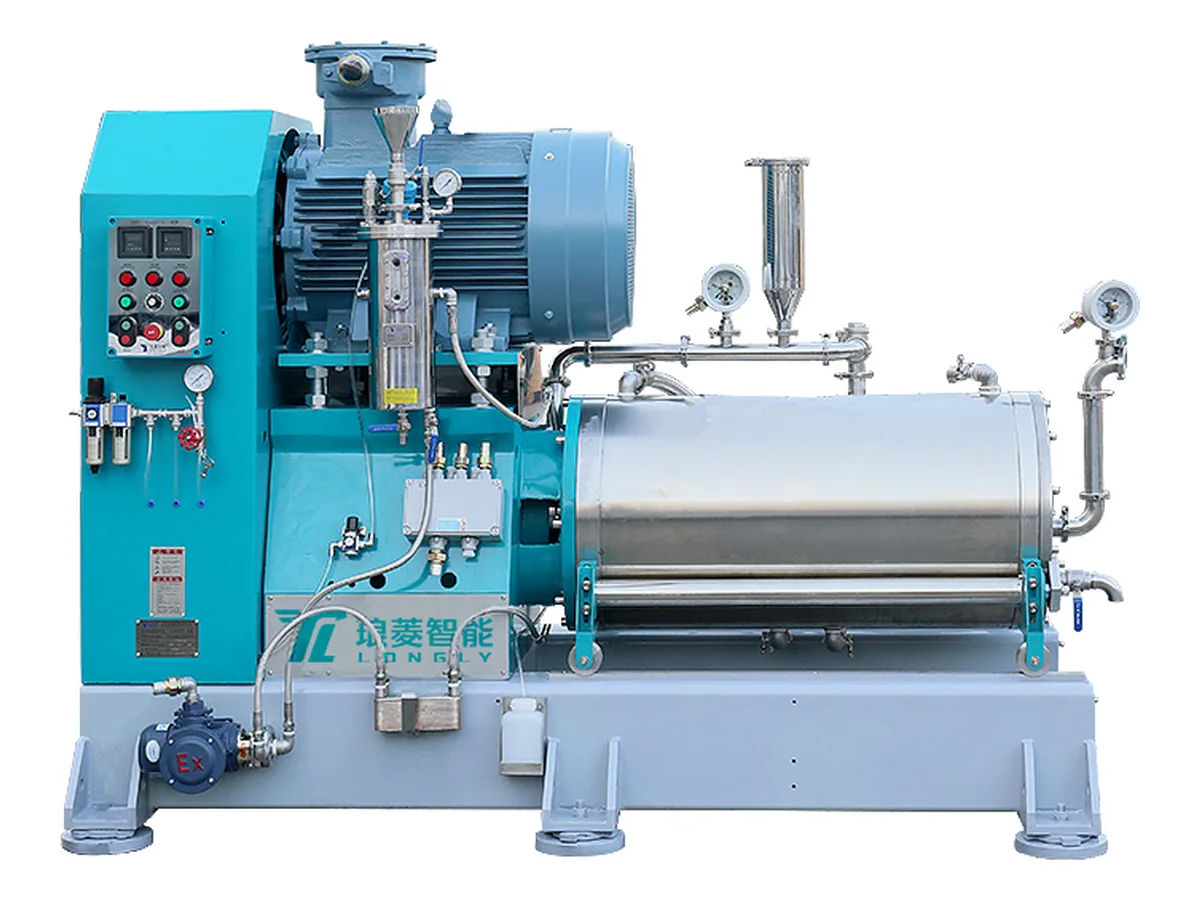
Micron / Sub-micron Bead Mill
The production workhorse for coatings, inks and general sub-micron work.
Choose it when: Disc type for general work; pin type when you need more energy per pass.
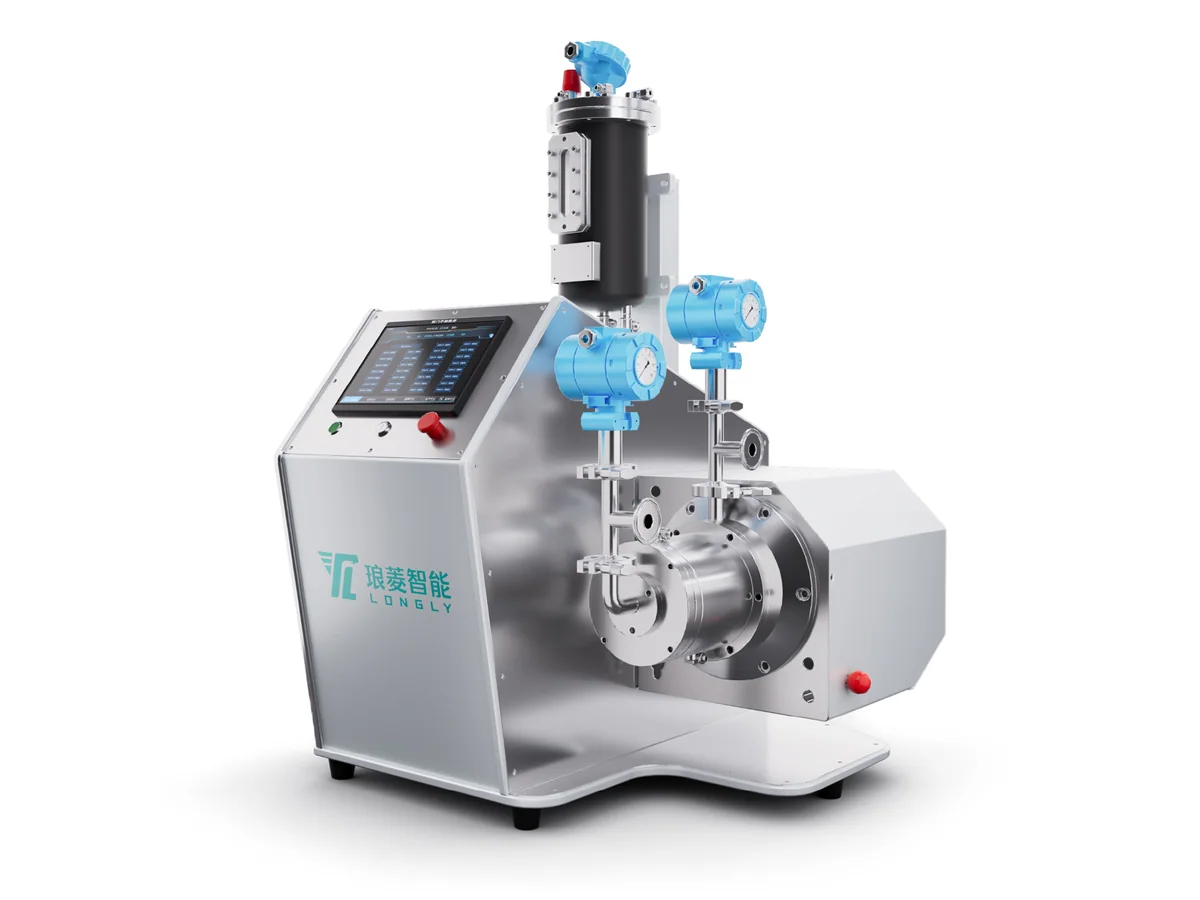
Lab & Pilot Mill Most requested
Same media and tip speed as the production machine, so results scale.
Choose it when: Start here if you need to prove a target before buying capacity.
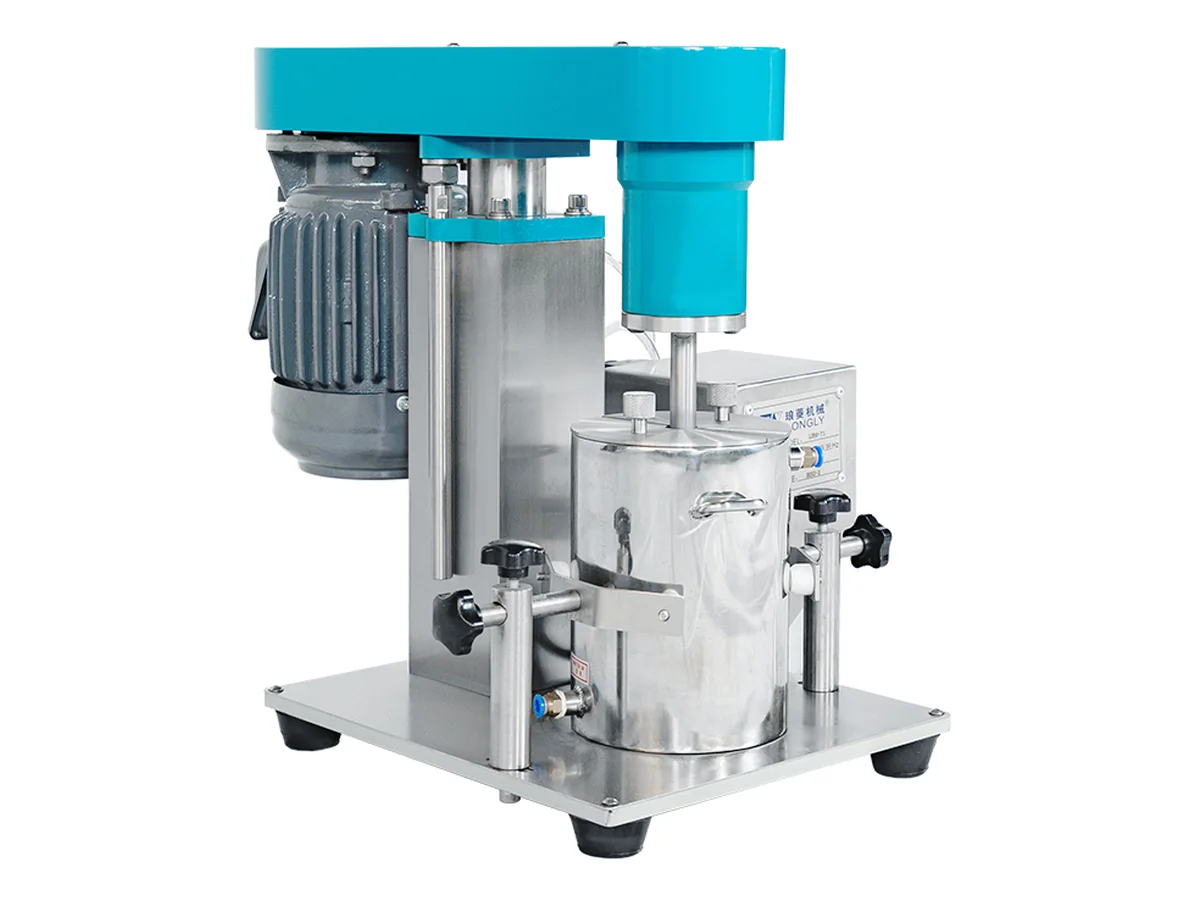
Basket Mill
Single-vessel dispersion — no external pump or recirculation loop.
Choose it when: Best for many formulations in small batches, or when cleaning time dominates.
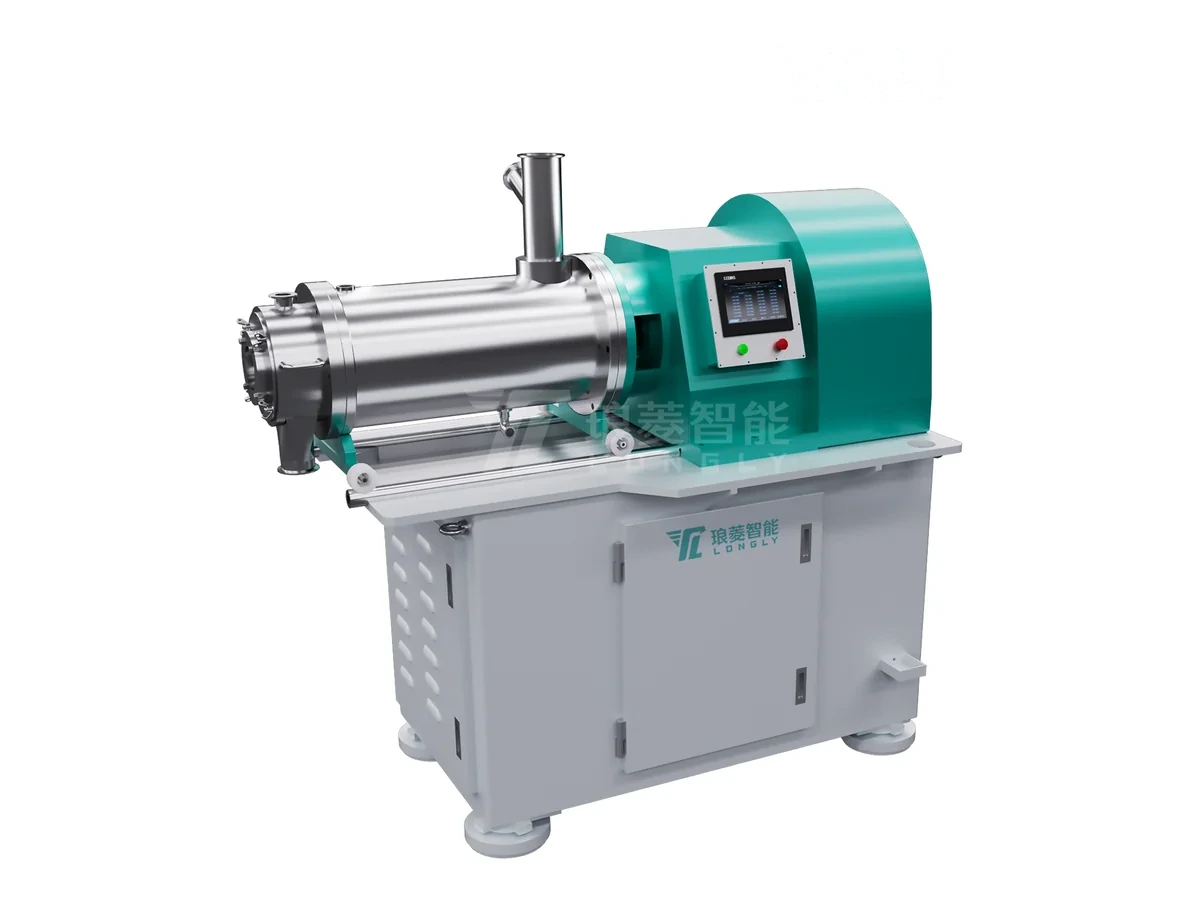
Dry Grinding Mill
Dry micronisation with air classification and dust collection.
Choose it when: For powders that cannot be processed wet — no drying step downstream.
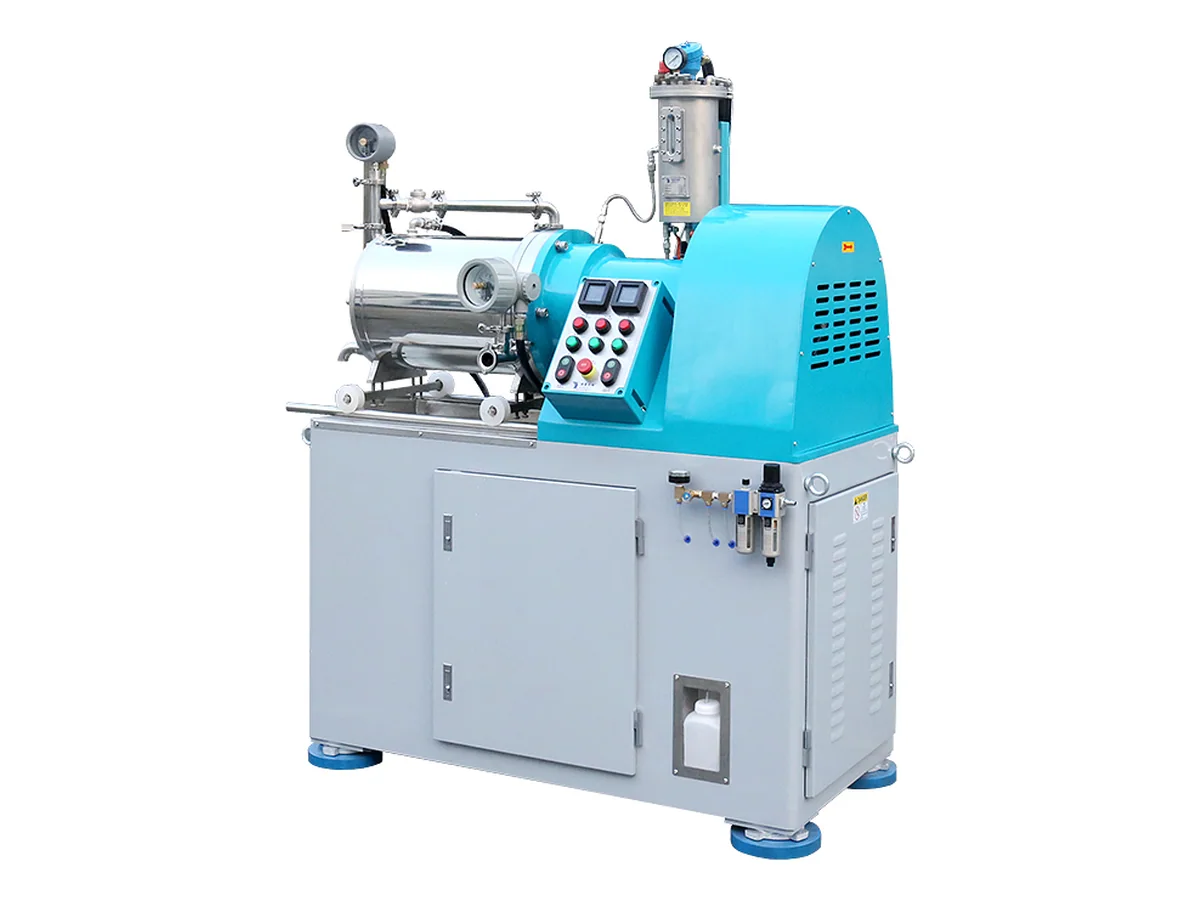
High-Viscosity Mill
Built for high-solid and high-viscosity material, with screw discharge.
Choose it when: For pastes and highly loaded compounds a standard mill will not move.
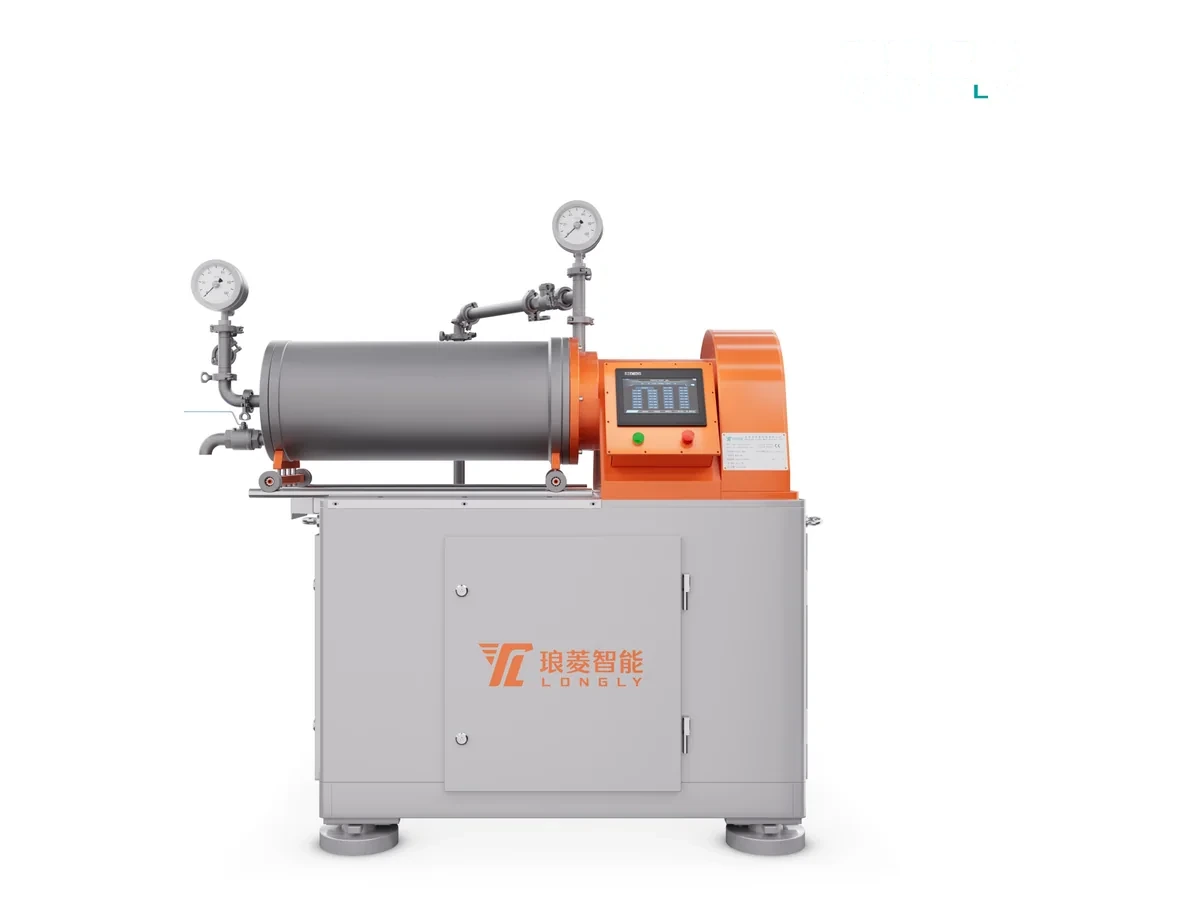
Mining & Large-Scale Mill
Stirred media mills sized for mineral slurry at plant throughput.
Choose it when: Selected on throughput and media consumption, not on fineness alone.
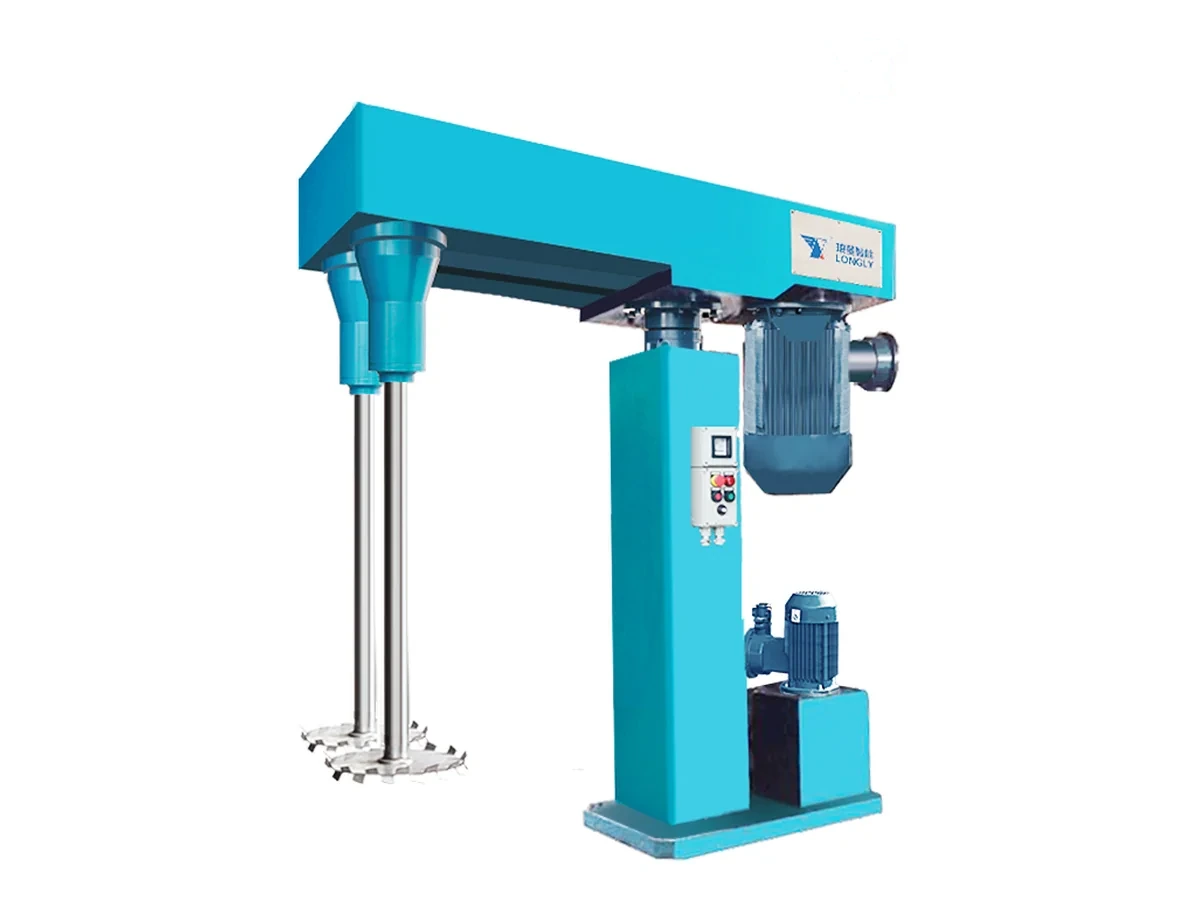
Complementary Equipment
Three-roll mills, inline pre-dispersion, mixers and spray dryers.
Choose it when: Often the cheapest throughput gain is better pre-dispersion, not a bigger mill.
All eight configurations
The complete index — wet and dry, 0.5 L laboratory units through to plant-scale stirred media mills.
Open the equipment index →Before you ask
What is the difference between a gap separator and a centrifugal one?
A gap separator holds media back with a fixed annular clearance — simple, cheap, and limited to media above about 0.1 mm. A centrifugal separator uses a rotating field, so the cut point is set by speed rather than by a physical slot. That is what makes 0.03 mm media possible.
Why two motors?
Because grinding energy and separation are two different requirements. Tying them together means every change in rotor speed changes the cut point. Independent drives let you set each one, and hold the cut point as the media wears.
Can I run it with 0.3 mm media and treat it as a normal nano mill?
You can, but you would be paying for a separator you are not using. If 0.3 mm covers your target, buy the pin mill.
How much media will I consume?
On a 50 nm duty, expect the media charge to be a real annual cost line rather than a rounding error. We will give you a consumption estimate per tonne for your material with the quotation, not after.
Is 50 nm a requirement, or an aspiration?
If your specification says 100 nm, this machine is more than you need. Send the number and the reason behind it — we will tell you which configuration reaches it at the lowest total cost.