Turbo-Type Nano Bead Mill
The turbine rotor is for the case where the product is thin, the flow is high, and over-grinding is a real risk. Accelerating beads outward instead of dragging them round gives a short and even residence time.
When short residence time is the whole point
A pin rotor gives you the narrowest distribution. A turbine gives you the same fineness at a much higher flow, with less time for the product to be damaged after it is already fine enough.
| What you are making | The problem people arrive with | Why this configuration helps |
|---|---|---|
| Inkjet pigment dispersion | Particles that are already on size keep being hit, and the tail of oversize never closes because the pass is uneven | Radial acceleration through the turbine gives a plug-flow-like residence time, so everything sees a similar number of stress events |
| Transparent iron oxide | Transparency needs the last coarse particles gone, but the product darkens if it is over-ground | Short, controlled residence stops the grinding exactly where the optical property peaks |
| Carbon black, high-jet | Viscosity climbs sharply once the agglomerates open, and the mill starts to choke | The turbine keeps pumping a charge that a pin rotor would stall on |
| Heat-sensitive binder systems | Product temperature rises faster than the chiller can remove it | Lower specific energy per pass, and less recirculation through the pump |
| Ceramic inkjet ink | Metal wear from the rotor shows up as colour shift in the fired tile | Ceramic turbine and ceramic-lined chamber, with no pin field to erode |
| Pesticide nano-emulsion | Droplet size drifts because the emulsion is re-sheared after it is formed | Single-pass operation becomes practical, so the emulsion is formed once and leaves |
Turbine and pin are not competitors in every case. Above roughly 60% solids, or above 5,000 cP, the turbine stops being the better choice — it needs flow to work.
Four consequences of the geometry
A turbine is a pump and a mill at the same time. Most of what it does well, and most of what it cannot do, follows from that one fact.
Turbine, not a pin field
- Feature
- Radial vanes accelerate the bead charge outward, then it returns along the chamber wall.
- Advantage
- There are no pins to erode, and no pin-to-wall gap to keep setting.
- Benefit
- Wear parts are cheap and the geometry does not drift with them — the machine grinds the same in year five as in month one.
Short and even, by design
- Feature
- The strong radial field moves material through the chamber quickly and in a consistent order.
- Advantage
- Every particle sees a similar number of stress events instead of a distribution of them.
- Benefit
- You stop over-grinding the fraction that was already fine — which is where colour, transparency and battery capacity are lost.
Single pass becomes practical
- Feature
- High volumetric throughput at production tip speed.
- Advantage
- The whole loop can be run once instead of ten times through a tank.
- Benefit
- Less tank, less pump, less cleaning between products — and a smaller footprint for the same tonnage.
It needs flow to work
- Feature
- The turbine depends on the slurry moving; a starved chamber just spins.
- Advantage
- It is intolerant of high viscosity and of intermittent feed.
- Benefit
- Which is exactly why we will point you at PM-V or PM-NP when your product is thick — this is the one place where a better rotor does not help.
PM-NT models and working envelope
The turbine configuration is offered on the same chamber sizes as the rest of the PM-N series, with a higher flow rating and a lower pressure drop.
| Model | Chamber volume | Motor power | Media range | Throughput | Target fineness |
|---|---|---|---|---|---|
| PM-NT5 | 5 L | 15 kW | 0.05 – 0.3 mm | 5 – 40 L/h | D90 < 100 nm |
| PM-NT30 | 30 L | 45 kW | 0.1 – 0.3 mm | 60 – 300 L/h | D90 < 100 nm |
| PM-NT60 | 60 L | 90 kW | 0.1 – 0.3 mm | 150 – 600 L/h | D90 < 100 nm |
Model figures are typical for this configuration — the binding specification comes with your quotation. The throughput figures assume a product under about 3,000 cP — above that the turbine's advantage disappears.
Common to every PM-NT
- Wetted parts: SS316L, silicon carbide, zirconia or polyurethane
- Separator: dynamic gap or centrifugal, matched to media size
- Cooling: full chamber jacket, plus optional cooled rotor
- Seal: double mechanical seal with barrier fluid
- Control: PLC + HMI, recipe storage, pressure and temperature interlocks
- Options: ceramic turbine, ATEX configuration, single-pass skid
When this is the wrong machine
The turbine is the right answer less often than the pin rotor. Four cases where it is the wrong one.
Your product is thick
Above roughly 5,000 cP the turbine cannot establish the radial field it depends on. It will spin and stop grinding.
PM-V high-viscosity mill →You need 50 nm, not 100 nm
That needs 0.03 – 0.05 mm media, which needs a centrifugal separator and a rotor built around it.
PM-NX centrifugal-separation mill →The industry norm for your product is recirculation
If your formulation is validated on a ten-pass loop, changing to single pass means re-qualifying it. That is a real cost, and often not worth it.
PM-NP pin-type nano mill →You grind one batch at a time
Single-pass throughput is wasted if the batch is 200 litres and changes every day.
PM-B basket mill →The first two are the ones that catch people. The turbine looks like an upgrade on paper and is a downgrade for thick material or for a 50 nm target.
Before you buy, send us a kilogram
Send 1 – 2 kg and we will run both a single pass and a recirculation series on the same material, so you can see which one your formulation actually wants.
Send 1 kg of your material
Slurry if you have it; powder plus the carrier you intend to use if you do not. We will send the address and the customs description to use, so it clears without a hold.
We run a size-reduction series
On the configuration we would actually quote. D10 / D50 / D90 after each pass, plus product temperature, so you can see where the curve flattens.
You get the curve, the model and a budget price
Whether or not you buy. The report is yours to show your own board or your customer.
Grinding something else?
PM-NT is one of five rotor options in the nano range. If your product is thick, or your target is below 80 nm, one of the others is the answer.
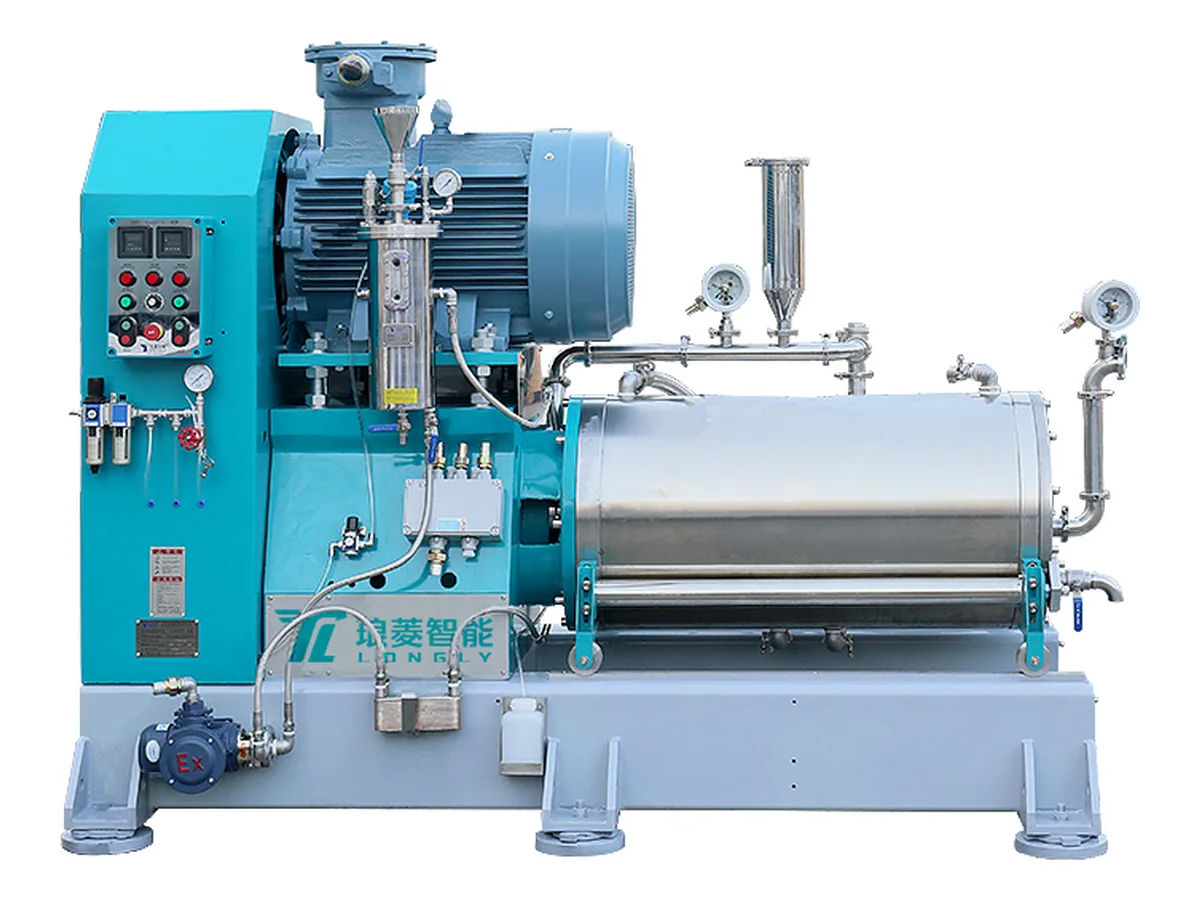
Micron / Sub-micron Bead Mill
The production workhorse for coatings, inks and general sub-micron work.
Choose it when: Disc type for general work; pin type when you need more energy per pass.
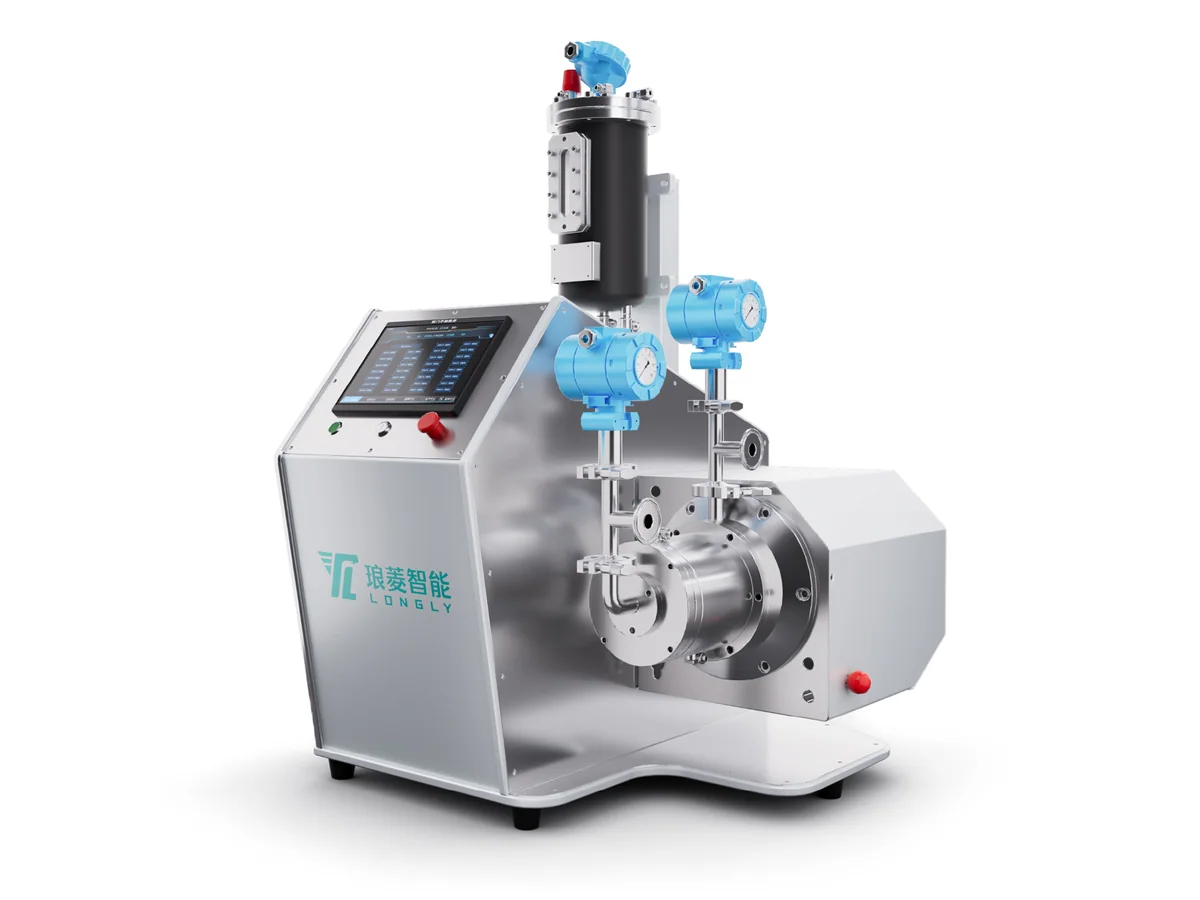
Lab & Pilot Mill Most requested
Same media and tip speed as the production machine, so results scale.
Choose it when: Start here if you need to prove a target before buying capacity.
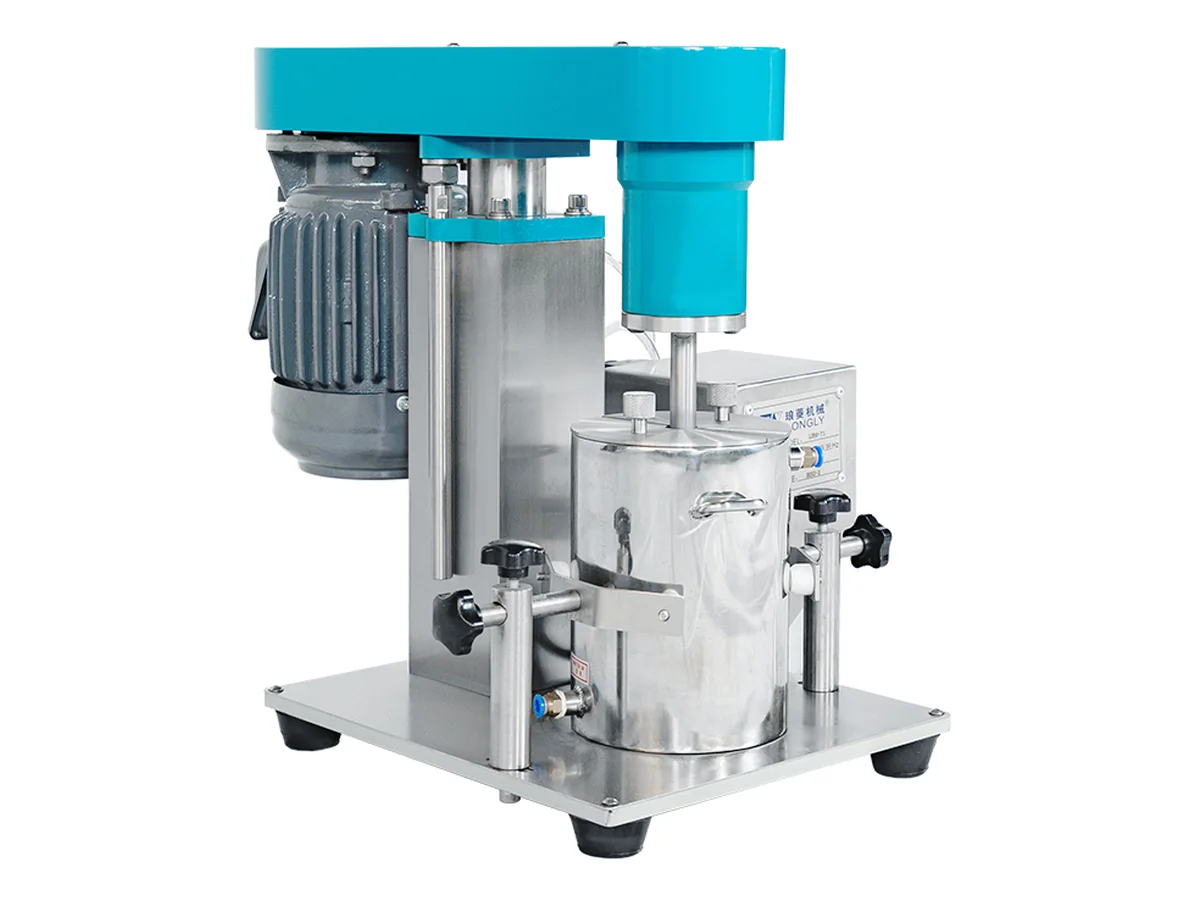
Basket Mill
Single-vessel dispersion — no external pump or recirculation loop.
Choose it when: Best for many formulations in small batches, or when cleaning time dominates.
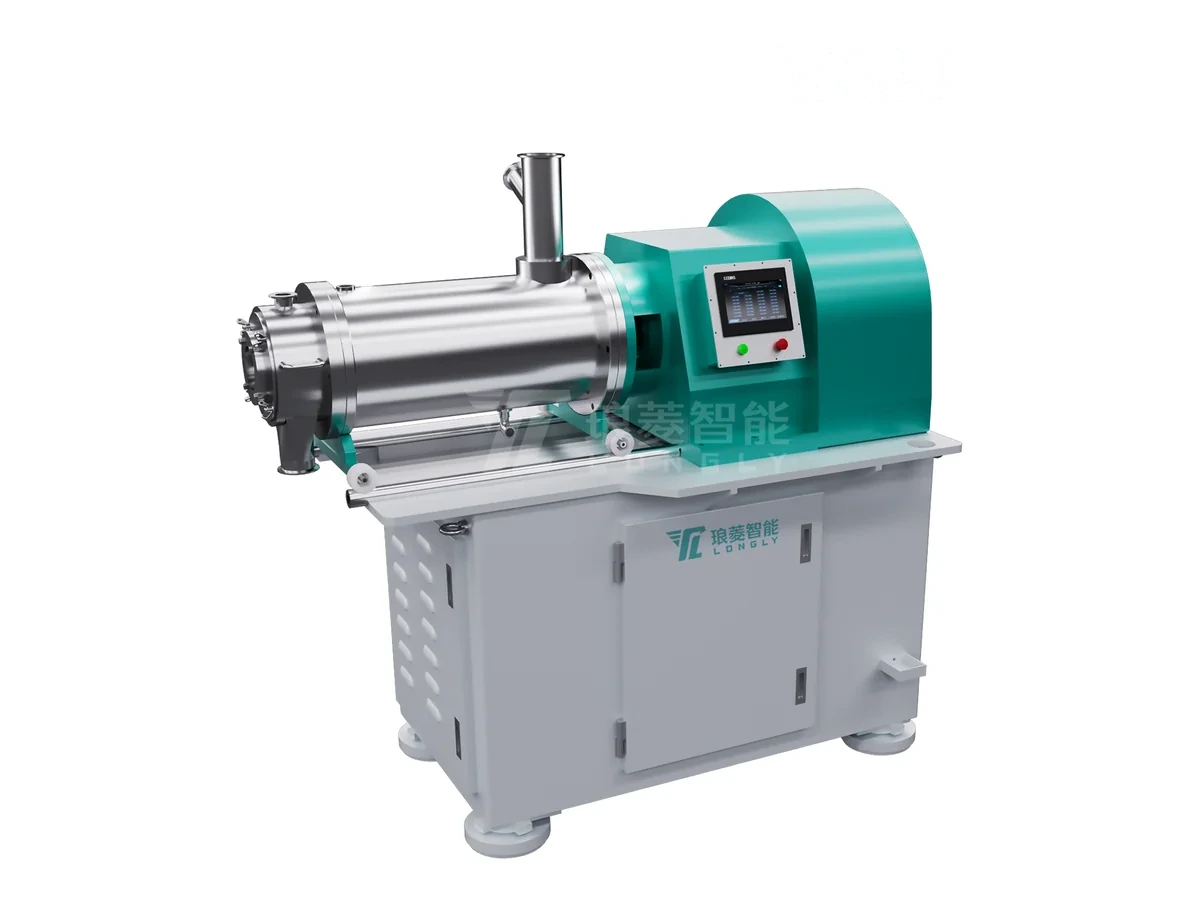
Dry Grinding Mill
Dry micronisation with air classification and dust collection.
Choose it when: For powders that cannot be processed wet — no drying step downstream.
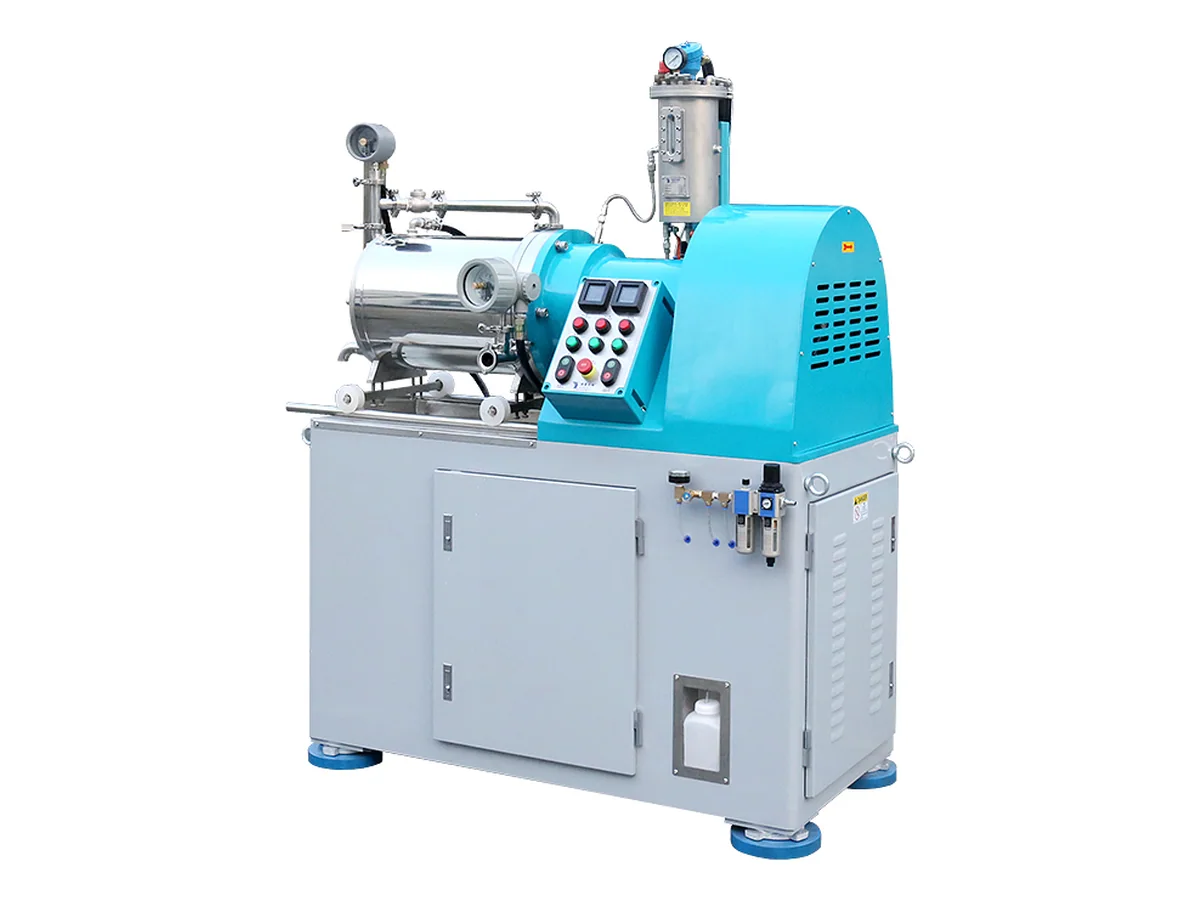
High-Viscosity Mill
Built for high-solid and high-viscosity material, with screw discharge.
Choose it when: For pastes and highly loaded compounds a standard mill will not move.
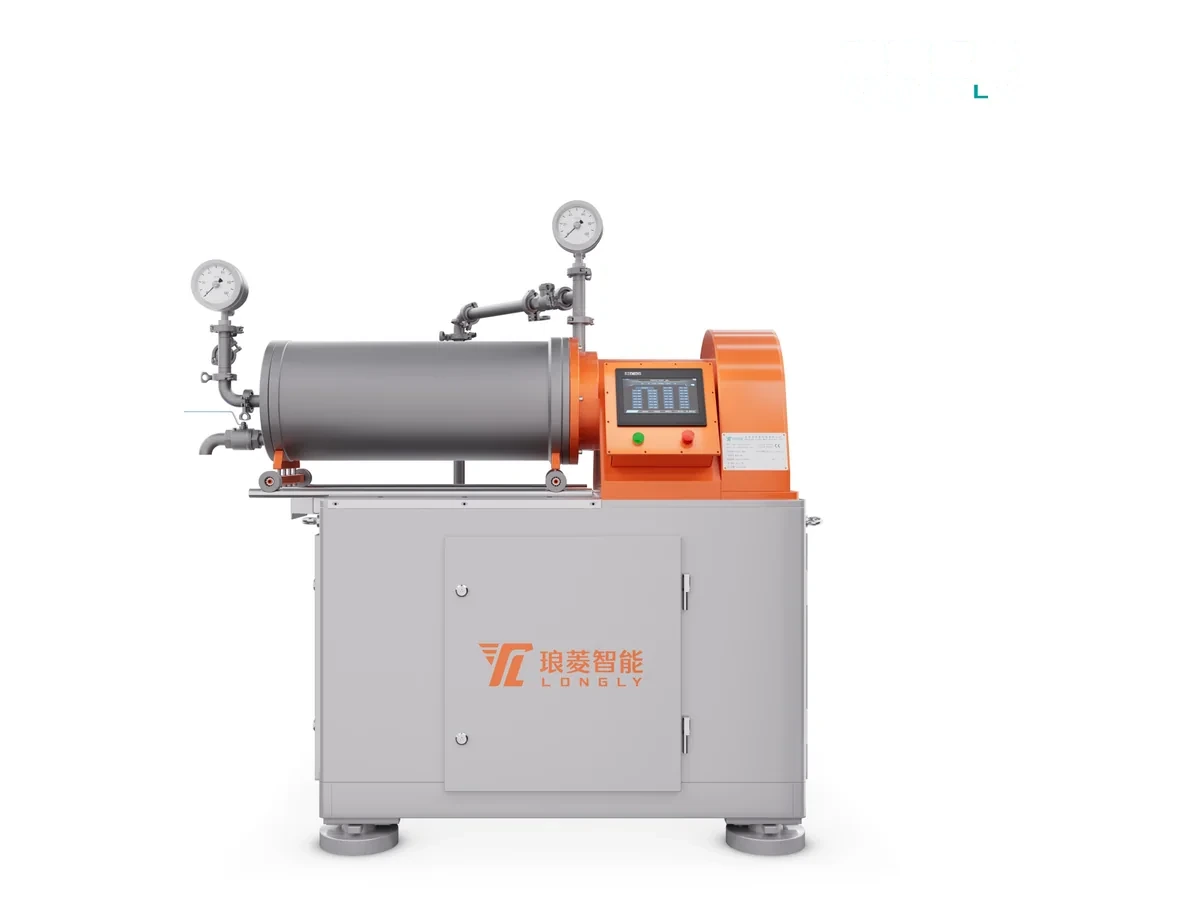
Mining & Large-Scale Mill
Stirred media mills sized for mineral slurry at plant throughput.
Choose it when: Selected on throughput and media consumption, not on fineness alone.
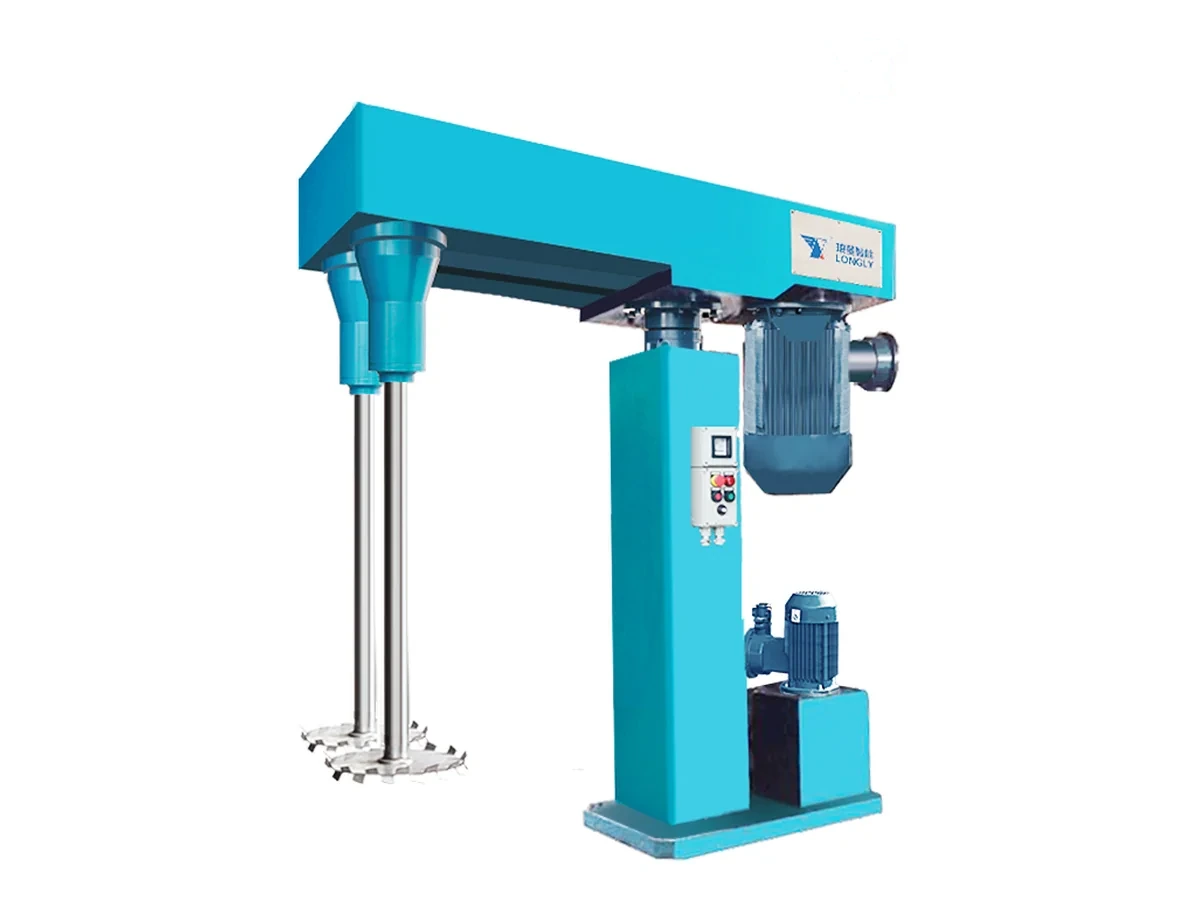
Complementary Equipment
Three-roll mills, inline pre-dispersion, mixers and spray dryers.
Choose it when: Often the cheapest throughput gain is better pre-dispersion, not a bigger mill.
All eight configurations
The complete index — wet and dry, 0.5 L laboratory units through to plant-scale stirred media mills.
Open the equipment index →Before you ask
Turbine or pin — what actually decides it?
Viscosity and flow. Above about 5,000 cP, or where the feed is intermittent, the turbine cannot hold its field and the pin rotor wins. Below that, if you want a short residence time, the turbine wins on both energy and wear.
Why are there no pins to wear out?
There are no pins. The vanes are part of the turbine, and they are a single replaceable component. That is why wear cost per tonne is lower than a pin rotor on the same duty.
Can it run single pass?
Yes, and that is often the reason people choose it. Single pass means no tank, no recirculation pump, and a much smaller installed footprint for the same tonnage.
Does it work with 0.05 mm media?
With a centrifugal separator, yes. With a gap separator, 0.05 mm is at the edge and we would normally steer you to the PM-NX instead.
Is your product thin enough for a turbine?
Tell us the viscosity at processing temperature and the flow you need. If the turbine cannot hold its field on your material, we will say so before you order.